
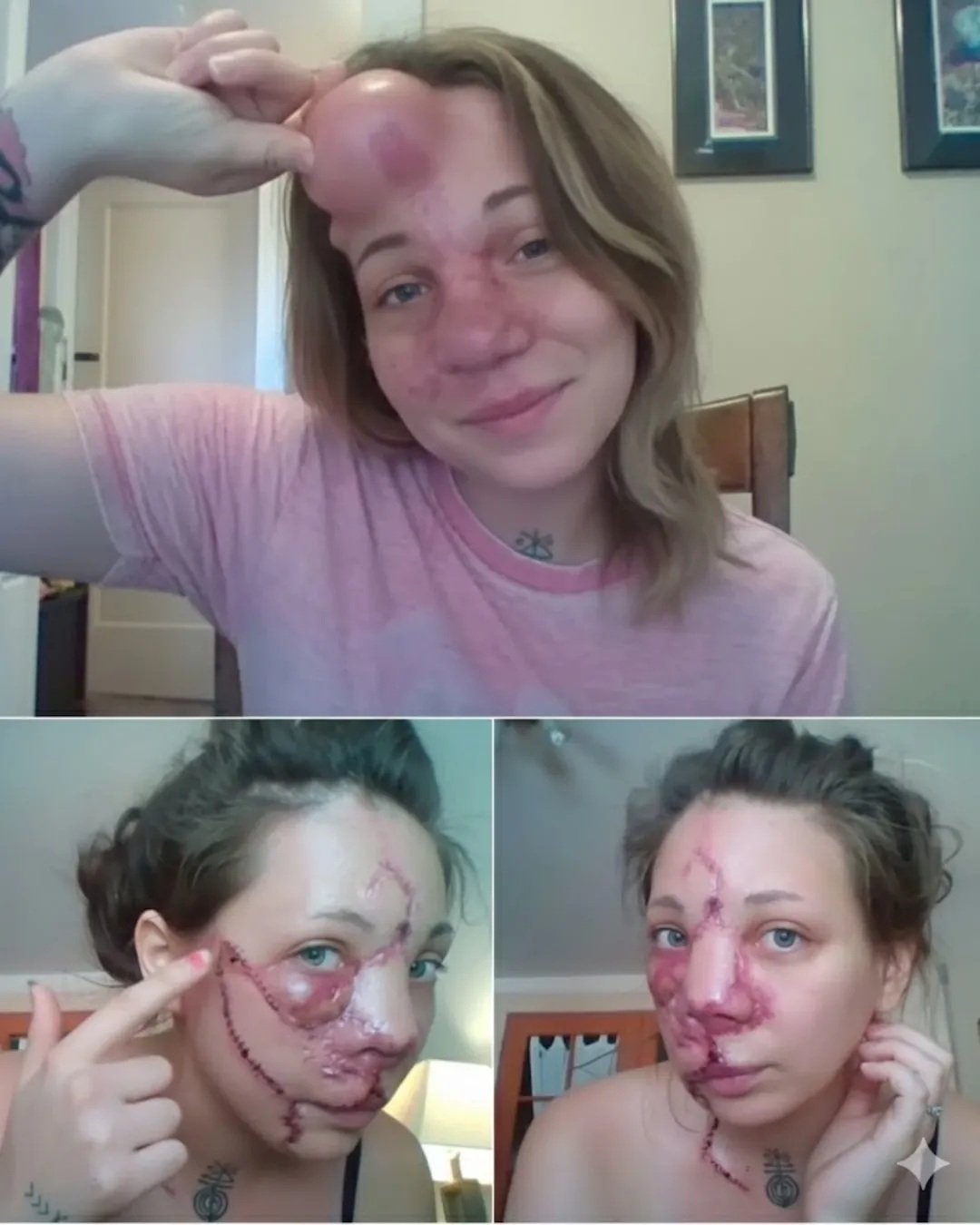
From the moment Jennifer Hiles was born, it was clear that her life would be different from most children’s.
She entered the world with a rare congenital facial condition that would quietly shape every chapter of her story.
Before she ever understood words like “difference” or “judgment,” the world began responding to her appearance.
People noticed her face first, long before they noticed her heart.
As a young child, Jennifer sensed it everywhere she went.
At playgrounds, children stared instead of inviting her to play.
At school, whispers followed her down hallways.
Sometimes they were spoken aloud, sometimes hidden behind hands, but they were always sharp.
Jennifer learned early that being different carried consequences.
Not physical danger, but emotional wounds that cut just as deeply.
Her parents did everything they could to protect her.
They offered love, reassurance, and a safe space at home.
But no parent can fully shield a child from the outside world.
Especially a world that struggles to accept what it does not understand.
Teachers often misunderstood her quietness.
Classmates mistook her reserve for weakness.

Strangers in public places stared openly.
Curiosity, judgment, and discomfort blended into expressions Jennifer came to recognize too well.
She grew up under the constant weight of eyes that saw a face before seeing a person.
In a society obsessed with symmetry and conformity, her uniqueness became a target.
Jennifer did not choose her condition.
But she paid for it emotionally every single day.
As she entered adolescence, the challenges changed.
They became not only social, but physical.
Pain that had once been mild began to grow.
Chewing became difficult.
Talking caused discomfort.
Even simple facial movements triggered strain.
Doctors tried multiple interventions.
Minor surgeries, therapies, and medical adjustments followed one after another.
Nothing provided lasting relief.
Instead, the condition worsened as Jennifer grew older.
Eventually, doctors faced a difficult truth.
Without radical surgery, Jennifer’s life could be in serious danger.
When the surgeons explained the reality, time seemed to stop.
“Half of your face must be removed to survive,” they said.
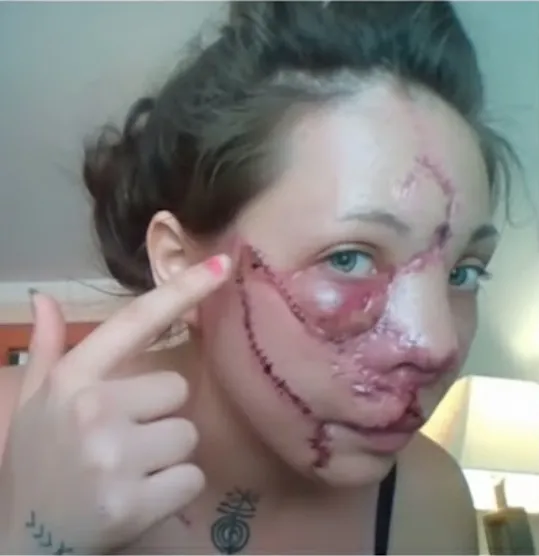
The words felt unreal.
Jennifer imagined mirrors, classrooms, conversations, and a future forever altered.
Fear rose quickly.
But beneath it, something else emerged.
Determination.
The same determination that had carried her through years of quiet resilience.
Jennifer was given a choice no one should have to make.
Surrender to despair or fight for survival.
She chose to fight.
Not because she was unafraid, but because she wanted to live.
The weeks leading up to surgery were some of the hardest of her life.
Emotionally, mentally, and physically.
She met with craniofacial surgeons, reconstructive specialists, and counselors.
Each appointment balanced medical facts with emotional weight.
Medical language mixed with fear.
Hope mixed with terror.
Jennifer’s parents never left her side.
They held her hands when conversations became overwhelming.
They offered reassurance even when they were afraid themselves.
Their presence became her anchor.
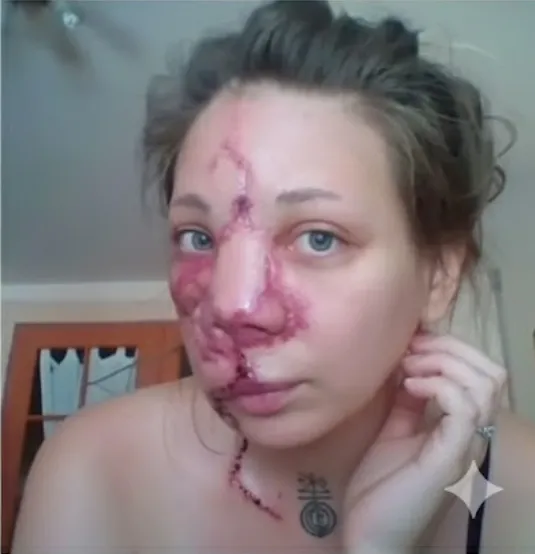
The surgical team explained every detail carefully.
What would be removed, what would be reconstructed, and what recovery would look like.
They spoke honestly about risks.
About uncertainty.
Jennifer listened intently.
She asked questions.
She demanded truth.
And in doing so, she reclaimed something she had rarely felt.
Control.
For the first time, she felt like an active participant in her own destiny.
When the day of surgery arrived, the hospital moved with controlled urgency.
Nurses prepared her gently, speaking softly to calm her nerves.
Her parents held her hands tightly.
Grounding her in love when fear threatened to overwhelm her.
The anesthesiologist explained the process.
Jennifer focused on breathing, on faces she trusted, on staying present.
Then she was taken into surgery.
And the waiting began.
Hours passed in the operating room.
Surgeons worked with extraordinary precision.
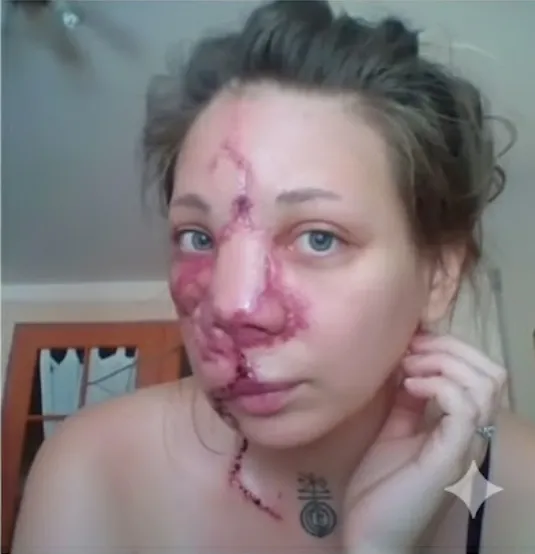
They carefully removed the diseased tissue.
They reconstructed facial structures using grafts and advanced techniques.
Every incision was deliberate.
Every stitch was a step toward survival.
Outside the operating room, her parents waited.
Time stretched endlessly.
When the surgeons finally emerged, emotion filled the space.
The operation had been a success.
Jennifer had survived.
She had chosen life and faced it head-on.
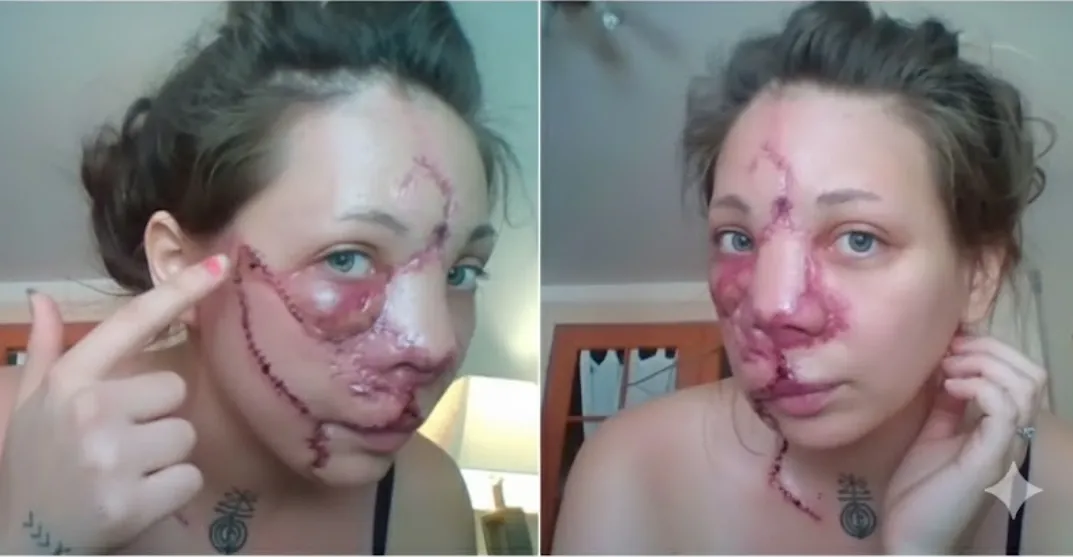
In recovery, her face was swollen and bandaged.
The reflection in the mirror was unfamiliar.
Pain surged through her body.
But beneath it burned a quiet triumph.
She had chosen courage over fear.
She had chosen life.
Recovery was not quick.
It was a marathon.
Swelling, bruising, and fatigue became daily realities.
Speaking, eating, and breathing comfortably took time.
Every day brought small victories.
And painful setbacks.
Jennifer’s parents remained by her side.
Helping her navigate medical routines and emotional lows.
They celebrated tiny improvements.
An easier swallow.
Less swelling.
The hint of a smile.
Physical therapy became part of daily life.
She worked to strengthen facial muscles and regain sensation.
Mirror checks were the hardest.
At first, she recoiled.
The reflection felt disconnected from the girl she remembered.
But slowly, something shifted.
Week by week, she began to see herself differently.
Not as broken.
Not as incomplete.
But as resilient.
Re-entering social life was another challenge.
Jennifer had spent years anticipating rejection.
Stepping back into school felt terrifying.
Yet reality surprised her.
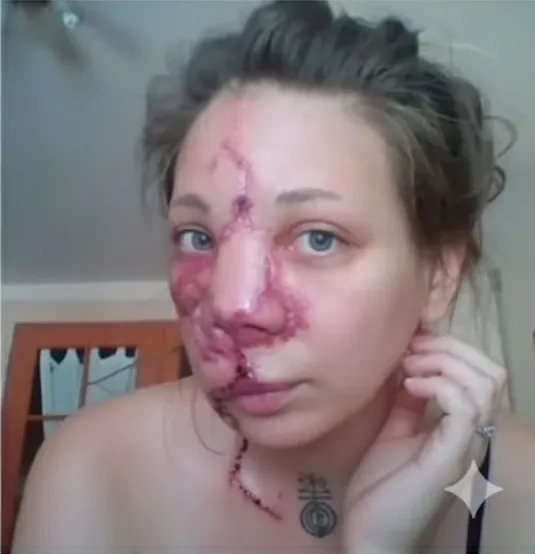
Friends offered support instead of judgment.
Classmates showed curiosity with kindness.
Teachers celebrated her determination.
They recognized her maturity and strength.
These moments changed something inside her.
They showed her that courage could inspire acceptance.
Emotionally, healing took even longer.
Years of judgment left deep scars.
Counseling became a lifeline.
It helped her process trauma, anger, and grief.
She learned how to name her emotions.
How to set boundaries with cruelty.
How to protect her peace.
How to rebuild confidence.
Jennifer began sharing her story publicly.
Through social media and advocacy.
She spoke honestly about surgery.
About pain.
About recovery.
About identity.
Her words resonated.
Families facing congenital conditions reached out.
People battling medical trauma shared their own stories.
Jennifer realized her pain had created purpose.
Her journey became a source of hope.
A reminder that survival can lead to meaning.
Years passed.
Her face healed, both physically and emotionally.
She returned to hobbies she once abandoned.
She built friendships rooted in authenticity.
Each glance in the mirror became a testament.
Not to loss, but to survival.
Jennifer’s journey also highlighted community.
Surgeons, nurses, therapists, counselors, and family.
They were not just caregivers.
They were allies.
She learned that asking for help is not weakness.
It is courage.
By sharing her story, she extended that community to others.
Offering strength to those still searching for it.
Today, Jennifer thrives.
She pursues her passions.
She builds meaningful relationships.
She advocates for others facing visible difference and medical adversity.
Her face, half-altered by surgery, is no longer a symbol of loss.
It is a symbol of survival.
Jennifer Hiles is not defined by her condition.
She is defined by her spirit.
Her story teaches us that bravery is not the absence of fear.
It is the decision to act despite it.
It reminds us that scars can become symbols of endurance.
That pain can transform into purpose.
And that even when life demands the impossible,
there is strength to be found, a life to reclaim, and beauty in choosing to keep moving forward.